
It’s been a surreal and slumbering summer here, almost like a medieval reverie poem. I hadn’t realised until I began re-reading The Canterbury Tales that Chaucer’s 14th century medieval ‘road trip’ poem – twenty nine pilgrims heading off from the Tabard Inn in Southwark for a story-telling spring jaunt to Canterbury – would never have been written were it not the Florence plague of 1348.
It was this that inspired Boccaccio to compose his Decameron– his own social comedy based on the idea of a small group of young Florentines exchanging witty, human and erotic stories to wile away their time from their ravished city. Chaucer became acquainted with Boccaccio’s in his Italian travels of the 1370s as a court diplomat. He was a part time poet.
Having hardly left our ancient hamlet of Upton Cressett, I am reminded how today’s forced isolation has made those of us lucky enough to be holed up in remote country boltholes – not unlike being snowed in for weeks – to experience the joys of an almost medieval cycle of life in which people hardly ever travelled beyond their immediate landscapes and feudal villages; and were, as a result, more connected to each other, the identity of their landscape – and their boss: God.
Living like a medieval Freeman has re-focused both mind and spirit. When you aren’t rushing to catch a train to commute, a Google calendar filling up months in advance with engagements, attending endless social events, and dealing with an avalanche of daily e-mails, one starts to view the ‘Wheel of Life’ – or Rota Fortuna– in a different way. I have found reading Chaucer in my very rusty Middle English, connecting back to the clearly structured medieval view of the world has been refreshing for the soul. A world in which God came first and everything else had its natural rank and position.

Nobody could ever describe Chaucer as a rootless Davos-style global ‘Citizen of Nowhere’ as I have (ashamedly) so often felt when rushing around (pointlessly) on business or just social rat-racing. The more I’ve self-secluded in our little hamlet, with daily visits to the tiny Norman church of St Michael with its lead tub font with carved sides that feel like rough stone cheekbones, or tramping alone through our deserted medieval village (we were also visited by the Black Death), I’ve felt a strange spiritual kinship with the medieval mind-set. It’s as if I’ve stepped into some morality play where one is forced to look at the world – and one’s values, and life – differently.
Suddenly the invisible and ‘unseen’, is more important than the ‘seen’. Yet the paradox is that a diplomat-poet like Chaucer – nor a humble author/publisher such as myself – cannot survive for long in self-isolation. Chaucer sat at the high table of what historian Marc Girouard calls the ‘high-low’ social mess of medieval society that was probably less elitist and money-shielded than today’s apartheid of the Rich v the Rest. The reason Chaucer – the upper-middle class Christian son of a wine merchant with court connections – became such a court celebrity was because he was a poet of the world.
When he writes in the Knight’s Tale that the nobleman’s cotton tunic had rust-mark stains from wearing chain mail after coming back from war, we feel we are stepping into the 14thcentury world of the Canterbury pilgrimage, although Chaucer makes it clear that most soi disant ‘pilgrims’ regarded such a journey as a form of holiday, or even a marriage market (the Wife of Bath has gone through five husbands, and is maybe looking for a sixth).
Like those today paying expensive tour companies to have their designer ruck-sacks ferried to their comfortable hotels as they ‘walk the Camino’ in Spain, Chaucer’s pilgrims are driven by baser motives than the piety they declare as they ride along in the April sunshine, mocking each other and exchanging bawdy gossip. Plus ca change.
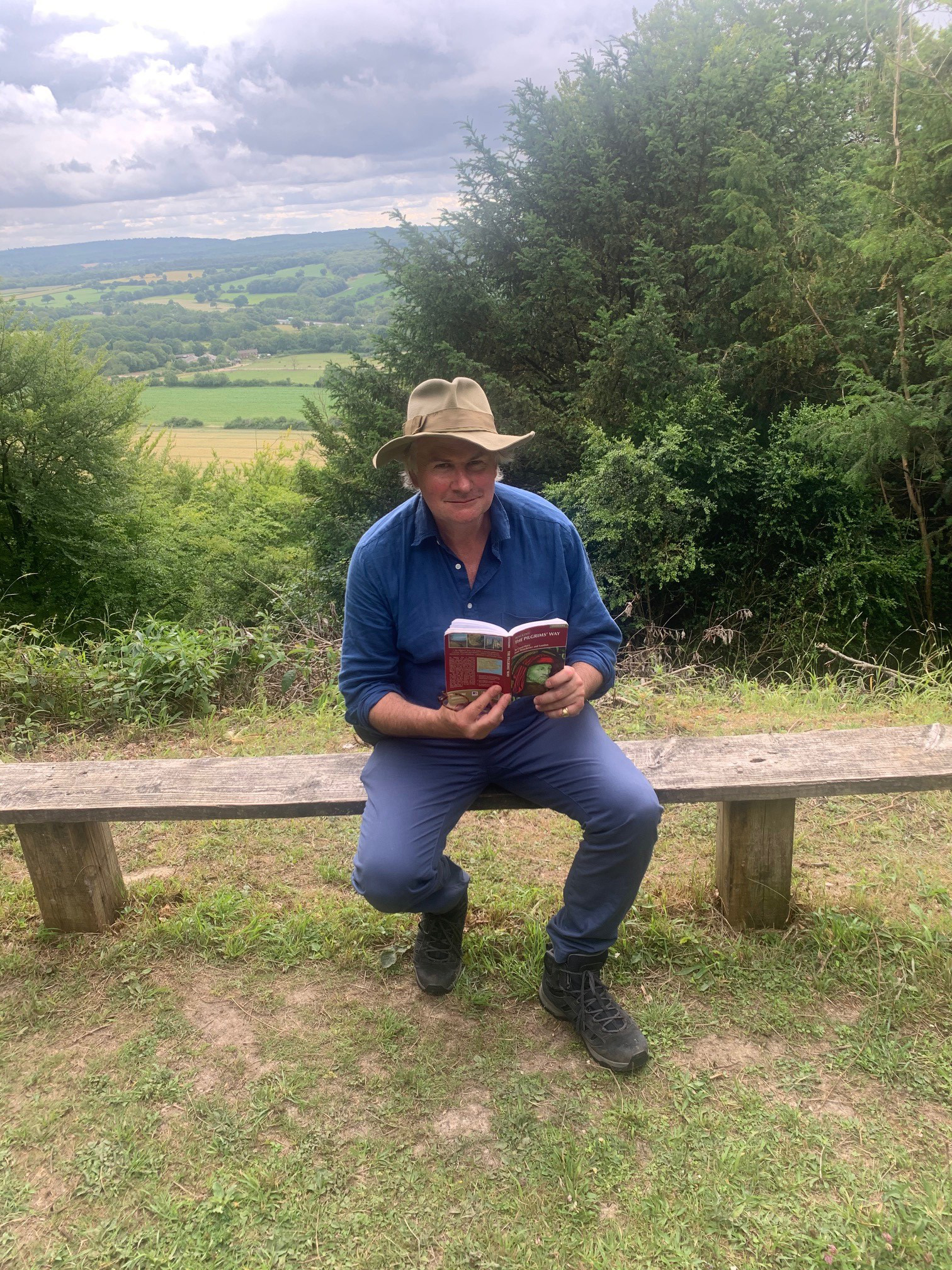
The Canterbury Tales are chastening today as a ribald satire on the very idea of going on a pilgrimage, a form of travel often revived in times of plague or war. Indeed, the only distraction I had all summer was to walk to Canterbury in the footsteps of Chaucer – just as Covid-travel banwas being lifted – to mark the 850th anniversary of the murder of Archbishop Thomas Becket.
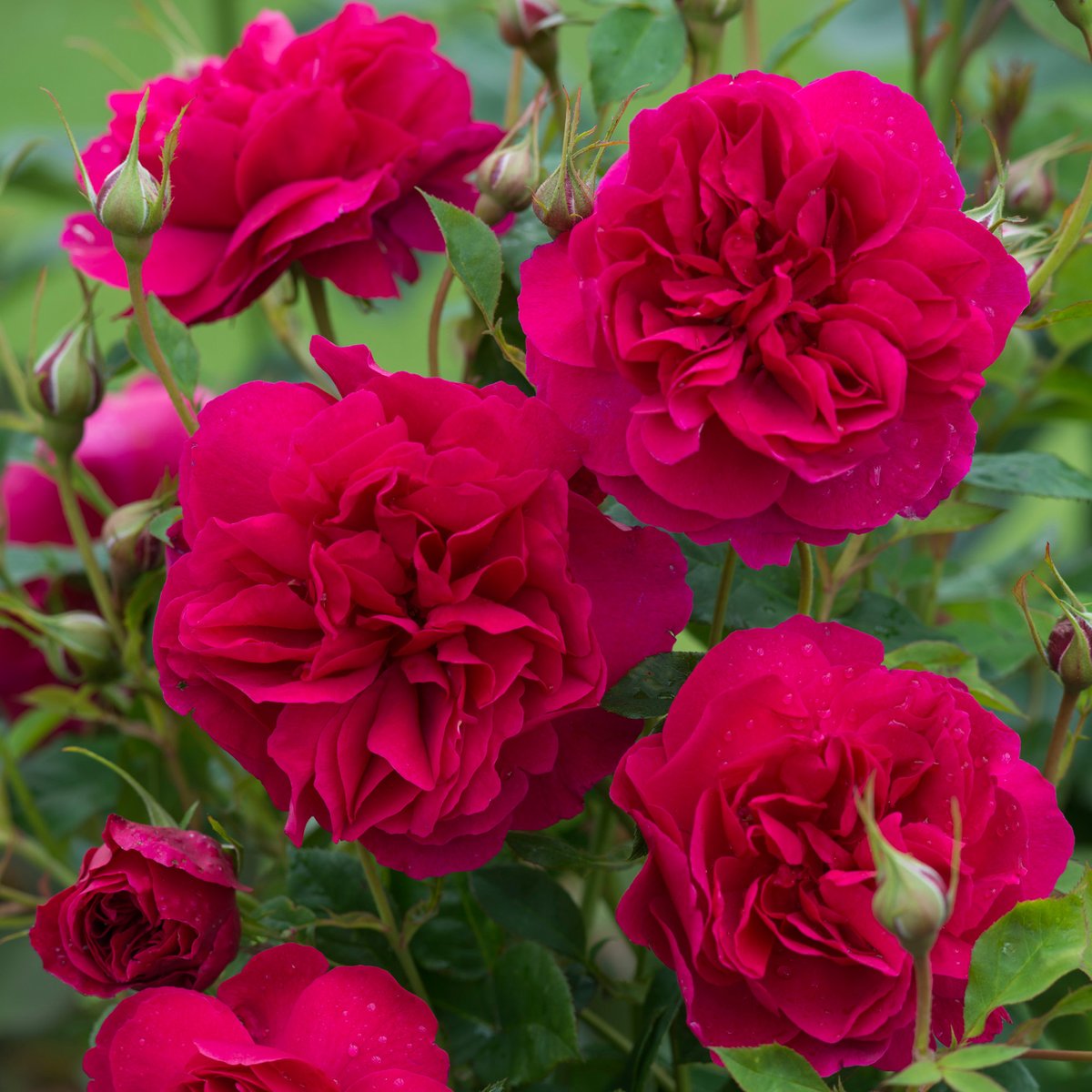
I was pleasantly surprised to be greeted by the Dean of Canterbury, the Very Rev Rober Willis, who told me that it was Canterbury cathedral that commissioned the Thomas Becket rose from legendary Shropshire rose maker David Austin. The design and scent was formulated in Austin’s kitchen. His only request was that it was called the Thomas a Becket rose as that is how he recalled the former archbishop being called in his school days.
One tragedy of the endemic is that Canterbury cathedral are postponing their events planned to encourage pilgrims to visit the famous cloisters where Becket was murdered in 1170. Exhibits were to have included the famous blood splattered ‘tunicle’ that Becket reputedly wore being sent over from the Rome. This holy relic can usually only be seen inside a glass reliquary in the Papal Basilica of Santa Maria Maggiore in Rome.
Chaucer’s art was forged the hard way. Not just on the actual battlefield (Edward III paid a £16 ransom for him after being taken prisoner near Rheims) but more importantly, he had to fight even greater life trials after he found himself suddenly out of a job as the king’s chief wool customs officer, through no fault of his own. In November 1386, he was ‘denounced’, forced to resign, turfed out of his London home and began seven years of penniless seclusion in Kent, cut off from his courtly audience.
Yet Divine Providence works in mysterious ways. It was this reversal of fortune that was to make Chaucer the father of English poetry as he was forced to write for a wholly new audience, outside the court: the public. Despite their racy fabliaux comedy, the tales were born out of adversity. Although never rich – his last work was a begging letter to the king called ‘The Complaint to His Purse’ – he had at least self-invested in that most critical form of capital for an artist: human experience.